Am I Not Your Brother?
One Ramadan, as I entered the masjid, I noticed everyone breaking their fast together except one brother who was breaking his fast all alone in a different corner of the masjid. Finding this rather odd, I approached him and asked why he was not joining everyone else, and he politely replied that I should ask the other group. I asked and was told that this brother owned a liquor store and so he was “not welcome” to join the others. This bothered me in many ways.
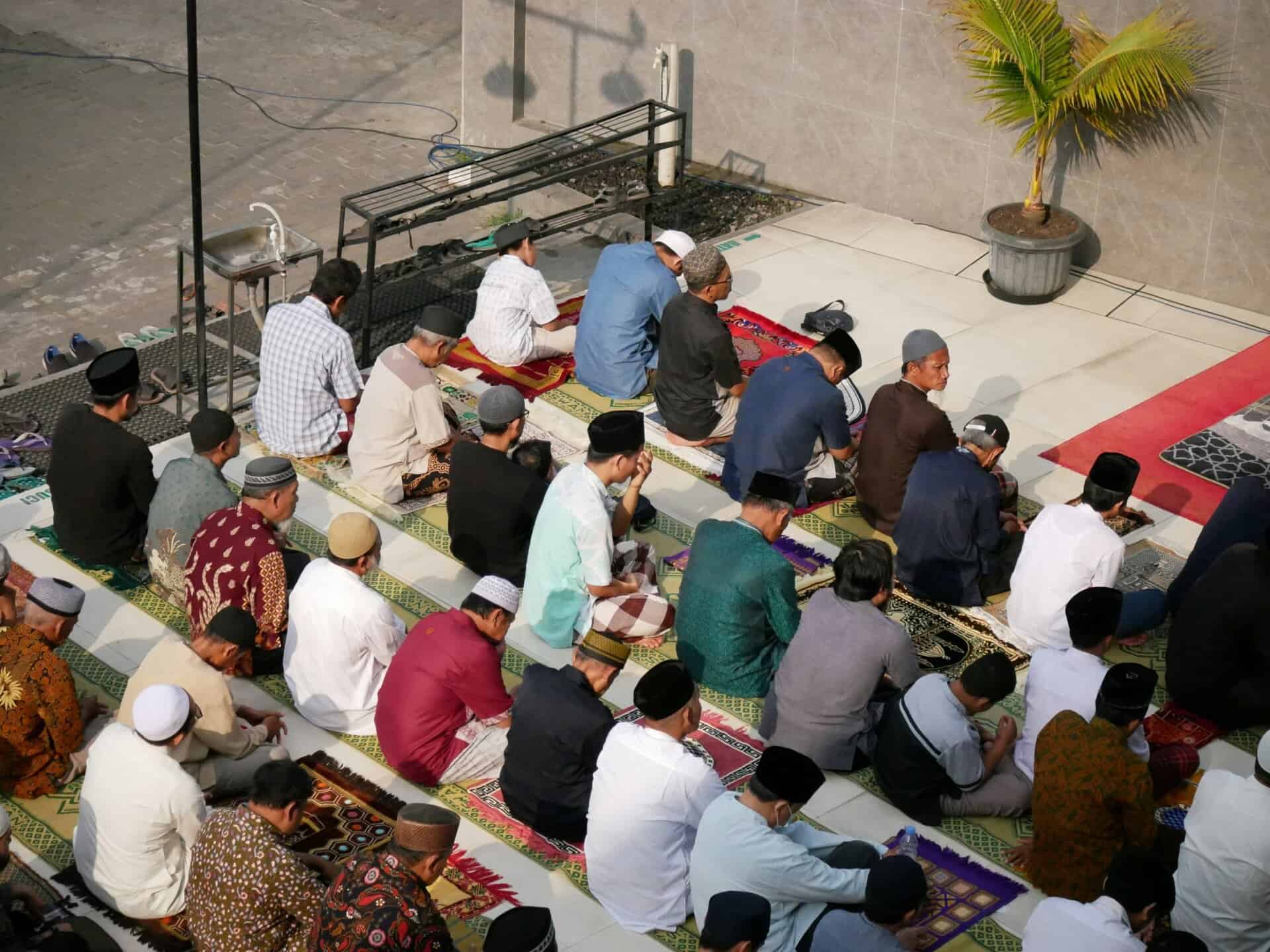
Firstly, this brother, despite his Haram (unlawful) business, still had enough Imaan (faith) to not only fast but also to actually have a desire to break the fast in the masjid with his fellow brothers. Secondly, their disdain to have anything to do with him, however, did not deter him from going to the masjid to break his fast. Thirdly, the group who considered themselves more pious failed to grasp Allah’s opportunity for them to show kindness, forgiveness and accommodation of their brother. Lastly, the irony of it all was manifested five minutes later when they had to stand shoulder to shoulder with him to make the Salaah.
During Ramadan, I used to break the fast at a different masjid each night. It is a month when the believers respond to Allah by attending the masjid for thirty nights in large numbers. Gathering to eat, pray, interact, and socialize can bring out the best (or the worst) in us. Ramadan comes to test our claims of brotherhood. Some believers demonstrate incredible acts of kindness, generosity, love, and mercy. They truly exemplify what brotherhood is all about, and we ask Allah to honor and reward them and their families. They are from among the best of us. Unfortunately, I have also witnessed undesirable behaviors that make us cringe. I have witnessed these phenomena – both the good and the not so good conduct in this month.
Here is a short list of the things that can mar our Islamic brotherhood which is a cornerstone tenet of Islam. The hope is that this will help us to avoid falling prey to these undesirable behaviors.
- Parking in such a manner as to block others or impede crucial pathways, showing no empathy or care for others.
- Showing favoritism when serving food, giving our friends the best pieces of chicken or serving them first.
- Reserving space for a friend yet to arrive while others are standing while eating due to lack of available seats.
- Coming late and pushing everyone to get to the front of the line (Saff).
- Judging and criticizing those who may dress inappropriately in harsh ways e.g. no khimar or those with tattoos. No consideration is taken to maybe recognize that this person may be coming to the masjid for the first time in a year.
- Putting aside food boxes to take home before everyone has finished being served.
- Using one’s phone during the Salah.
- The backlash when a child innocently violates the normative rules of decorum. The loud scream of “whose child is this” fills the air with irritation, anger, and intolerance. The poor parent is judged and made to feel like they lack parenting skills.
- Forgetting to provide food for the security guard or other staff who may be non-Muslim who are hired for the month.
- The infighting by those who serve along with the cooks and food preparers can sometimes get so heated that it is heard by those coming to break the fast.
- The insistent questioning by entitled folks who criticize everything such as the choice of meals being served, the AC, the lights, the thin carpet, and the long wait lines to get free food.
The drama, unfortunately, does not end here. The misplacement of shoes and the accidental spilling of garbage on the ground also create unnecessary problems and issues. These behaviors demonstrate a lack of understanding of brotherhood and how it is practically operationalized in our lives. We make excuses for our brothers and sisters, as many of them are coming for the first time in the year. To their credit, when reminded about their errant actions, most of them correct themselves with humility. However, the importance of reminding them and ourselves of the key Islamic conception of brotherhood (Ukhuwwah) cannot be overemphasized. It is not just a social friendship: it is a bond rooted in belief, loyalty, mercy, and shared responsibility. Let us summarize its foundational principles:
- Brotherhood Is Based on Iman (Faith)
Allah reveals in the Qur’an, in Surah Hujuraat, the proper way of interacting with fellow believers. This chapter was revealed in Madina at a time when the Muslims were trying to establish a community of believers. The believers who had migrated to Madina from Makkah became known as the Muhajireen (Migrants), and the believers in Madina became known as the Ansar (The Helpers). The love and kindness they showed to one other, despite being strangers, highlight, the power of true brotherhood. In the 10th verse of this chapter, Allah reveals a revolutionary concept. The verse says, “Verily the believers are but brothers, so make peace between your brothers and have Taqwa (God consciousness) for Allah so that you may receive mercy.” (49:10).
There are four things mentioned:
“Verily the believers are but brothers”
This was an earthshattering statement to a people whose very social structure, economics, culture, traditions, identity, race, nationality and relations were defined by tribal and family affiliations. They fought wars in the name tribalism and family lineage. With this revelation, they underwent an ideological shift in their understanding of brotherhood. They now saw themselves as one brotherhood based on their Iman and connection to Allah. The new conception of brotherhood also shattered their false notion of superiority. They came to realize that superiority could only be based on closeness to Allah and not on nationality, race or tribal attachments.
“So, make peace between your brothers”
Allah immediately orders the believers to fix their affairs by reconciling and realigning themselves based on this new way (brotherhood based on faith-attachments, no longer based on racism or tribal bigotry)
“and have taqwa (God consciousness) for Allah”
In other words, do not allow this reconciliation to be marred by ego, favoritism, arrogance, or shallow offerings of peace. Be mindful that Allah is watching us and so do the right thing.
“so that you may receive mercy.”
Then Allah gives good news to those who respond that He will cause them to receive His Mercy. This is one of the most special and important qualities of Allah.
This is the foundational principle of the Islamic brotherhood. It is the unbreakable bond that connects a believer from Alaska to Guyana and beyond. The whole Ummah forms one brotherhood. Today, humanity still struggles to reconcile with their fellow humans as racism, discrimination, and nationalism runs rampant.
- Brotherhood is to be manifested in our actions, not just words
The Prophet ﷺ said: “None of you truly believes until he loves for his brother what he loves for himself.” This comprehensive statement is significant as it positions love as the motivation. When we love someone, we tend to put them as priority and want to do as much as possible to ensure they are protected and successful. Some the ways this gets manifested are:
- Helping them financially
- Advising them sincerely
- Defending their honor
- Visiting them when sick
- Attending their janāzah
- Making duʿāʾ for them
Brotherhood (Ukhuwwah) is not just a symbolic acknowledgement of affection; it is a dynamic, action-oriented lifestyle.
- Brotherhood means protecting and defending your brother/sister
The Prophet ﷺ said: “A Muslim is the brother of a Muslim — he does not oppress him nor abandon him.” He also said “The whole of a Muslim is sacred and inviolable to another Muslim—his blood, his wealth and his honor.” He also instructed, “A Muslim is one from whom his fellow Muslim feels safe in relation to this tongue and hand.” Thus, part of the Islamic lifestyle of brotherhood is to avoid the following when it comes to our brothers:
- No backbiting
- No betrayal
- No public shaming
- No exploiting
The dignity and honor of our fellow believers must be upheld at all times.
Of course, there are many more dimensions of brotherhood. Ramadan comes and provides us the perfect opportunity to do as much as possible for our brothers and sisters. These include:
- Respecting each other
- Feeding and helping the poor believers
- Exchanging gifts as a sign of love
- Being merciful and just
- Smiling at one another
This is the month to help each other with our challenges. We strive to find joy in helping each other solve our woes. It is the month where our brotherly feelings for each other get tested. We conclude with an incident quoted by many scholars that demonstrates how much the companions loved each other for the sake of Allah. It is an example of true Ithaar (selflessness).
During the Battle of Yarmouk, one of the companions went searching among the wounded for his cousin. He eventually found his cousin who was severely injured and other the verge of death. He offered his cousin water. Instead of taking the water, his cousin gestured to take the water to another wounded companion who was heard crying out of thirst. But this wounded companion also refused to quench his thirst, asking that the water be taking instead to another wounded companion groaning in thirst. By the time the water reached the third man, he had passed away. The water was taken back to the second—he, too, had died. Then back to the first—and he had also died without drinking. All three preferred their brother over themselves in their final moments.
Allah praised the Ansar and Muhajiroon for this preference for one’s brother over oneself. He says in Surah Al-Hashr (59:9): “They prefer others over themselves, even though they are in need.”
This Ramadan let us lead with our smiles, warmth and mercy. Let us seek to volunteer, give and share as a way of showing empathy and love. Let us make a few friends and bask in the brotherly glow that Ramadan brings. Let us especially look for the new Muslims and those coming to our masjid for the first time and sit with them. Let Ramadan be proud of how we relate to each other during the month. May Allah unite our hearts, protect our brotherhood and accept our Ramadan.